

Introduction
India’s relationship with oils runs deep. For centuries, families have used ayurvedic oils for hair, skin, digestion, massage, and healing rituals. Today, cold-pressed oils have joined that landscape — praised for their purity, nutrient density, and minimal processing.
But with both categories now widely available, people often ask:
What’s the real difference between Ayurvedic oils vs cold-pressed oils? Which one is better? And which should you use?
This guide lays it out clearly—from where each comes from to how it’s made, what it does well, where it falls short, and when it makes the most sense to use it. Whether you’re aiming for healthier skin, stronger hair, hormonal balance, or everyday wellness, knowing these differences helps you make the right call.

1. What Exactly Are Ayurvedic Oils and Cold-Pressed Oils?
Before comparing, let’s clarify what each type truly means — because most confusion comes from the terms themselves.
A) Ayurvedic Oils — Oils Infused with Herbs
Ayurvedic oils follow classical Ayurvedic formulations where medicinal herbs are infused into a base oil through slow heating or decoction.
Typical Ayurvedic Oil Process:
-
Herbal decoction prepared in water
-
Base oil added (usually sesame or coconut)
-
Slow heating for hours
-
Water evaporates, herbs infuse into oil
-
Oil filtered & bottled
Common Ayurvedic Oils:
-
Bhringraj oil
-
Brahmi oil
-
Neelibhringadi
-
Kumkumadi tailam
-
Sesame-based massage oils
These oils are therapeutic — meant for specific concerns based on Ayurvedic principles.
B) Cold-Pressed Oils — Pure, Unheated Oils Extracted Mechanically
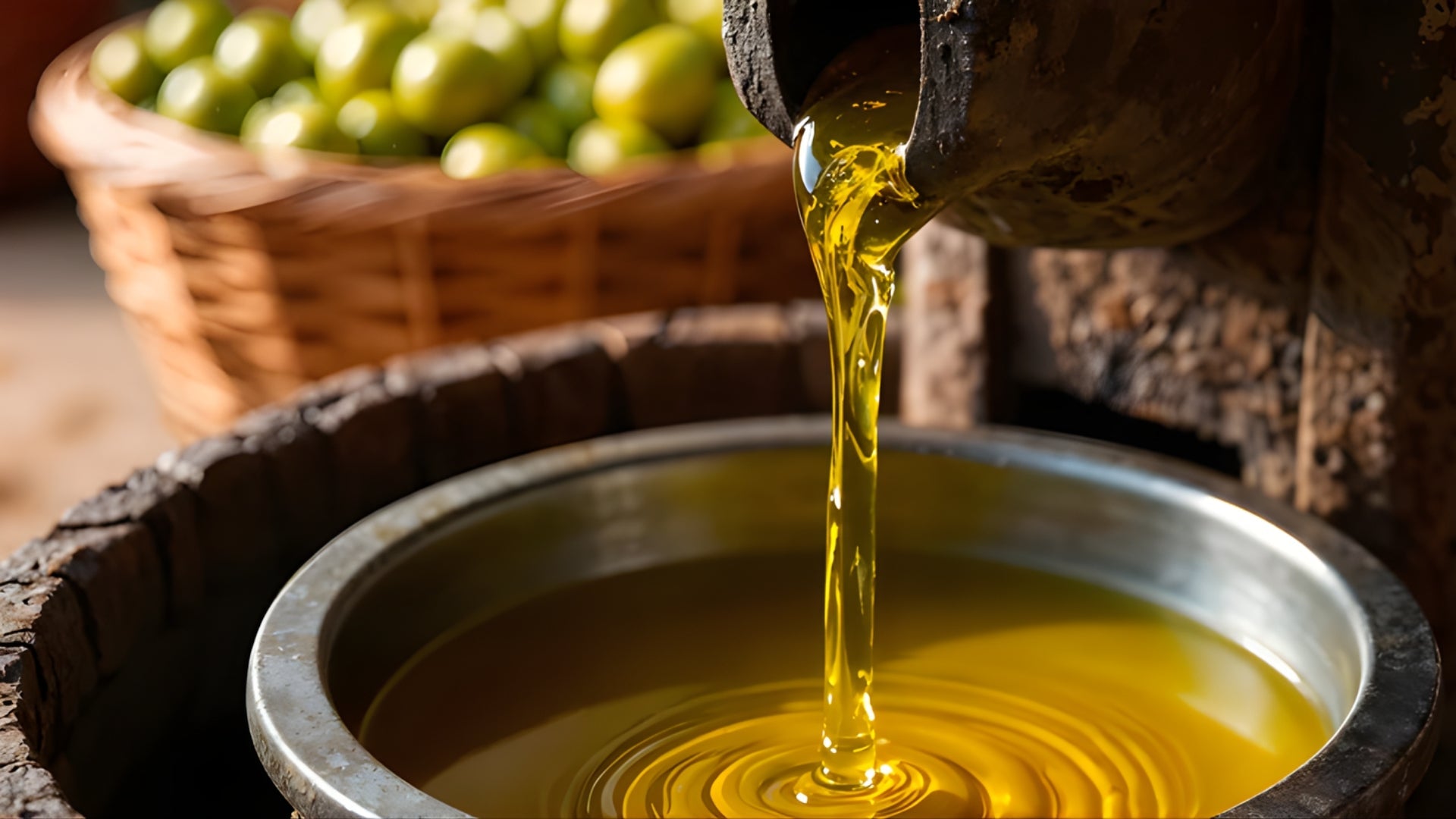
Cold-pressed oils are extracted from seeds, nuts, or kernels without heat, chemicals, or refinement.
Cold-Pressed Extraction:
-
Seeds ground
-
Oil squeezed through slow mechanical pressure
-
No heat applied
-
Nutrients preserved: Omega-3, Vitamin E, antioxidants
Common Cold-Pressed Oils:
-
Coconut oil
-
Flaxseed oil
-
Neem seed oil
-
Castor oil
-
Wheat germ oil
-
Groundnut oil
-
Almond oil
These oils are valued for their nutrient integrity and purity, making them suitable for skin, hair, cooking, digestion, and supplements.
Harvard – Healthy fats explained
2. Ayurvedic Oils vs Cold-Pressed Oils: The Real Differences
Here’s the direct comparison you won’t usually find on product pages.
1. Purpose & Philosophy
Ayurvedic Oils
Built on the Ayurvedic principle of dosha balance. They target specific concerns like hair fall, insomnia, stress, sinus issues, or skin pigmentation.
Cold-Pressed Oils
Focus on nourishment — essential fatty acids, hydration, skin barrier repair, digestion support, and liver health.
Put simply:
Ayurvedic oils = corrective
Cold-pressed oils = nourishing
2. Ingredients Used
Ayurvedic Oils:
-
Herbal decoctions
-
Medicinal extracts
-
Infused botanicals (bhringraj, brahmi, amla)
-
Sesame or coconut base
Cold-Pressed Oils:
-
Single-ingredient, pure oils like flaxseed, neem, wheat germ, castor
Cold-pressed oils are simpler — and often better for sensitive skin.
3. Processing Method
Ayurvedic Oils:
Require heating, which may slightly reduce delicate fatty acid content but enhances therapeutic potency.
Cold-Pressed Oils:
Zero heat. Nutrients remain intact. Maximum purity.
4. Shelf Life & Stability
Ayurvedic Oils:
Long shelf life due to herbal infusion.
Cold-Pressed Oils:
Shorter shelf life because there are no preservatives or heat treatments — a sign of purity.
5. Targeted Outcomes vs General Wellness
Ayurvedic Oils Are Best For:
-
Hair fall (bhringraj, neeli)
-
Scalp heat
-
Stress & sleep
-
Pigmentation (kumkumadi)
-
Ayurvedic therapies (abhyanga, shirodhara)
Cold-Pressed Oils Are Best For:
-
Skin moisture & glow
-
Strengthening hair roots
-
Improving digestion
-
Supporting hormones
-
Liver detox
-
Immunity
-
Daily nourishment
ScienceDirect – Benefits of cold-pressed oils
3. Cold-Pressed Oils vs Ayurvedic Oils for Skin
Ayurvedic Oils:
Contain herbs that brighten, cool, or treat pigmentation. Good for targeted therapy.
Cold-Pressed Oils:
Strengthen the skin barrier, lock moisture, support healing, and reduce inflammation.
Best Oils for Skin (Cold-Pressed):
-
Wheat Germ Oil → for glow and Vitamin E
-
Flaxseed Oil → anti-inflammatory, acne-friendly
-
Coconut Oil → hydration & barrier support
-
Neem Oil → acne & detox
Neat Everyday Skin Glow Collection
4. Cold-Pressed Oils vs Ayurvedic Oils for Hair
Ayurvedic Oils:
-
Excellent for hair fall
-
Improve scalp circulation
-
Reduce dandruff
-
Balance pitta-related hair issues
Cold-Pressed Oils:
-
Strengthen hair shaft
-
Prevent protein loss
-
Reduce dryness & breakage
-
Detox scalp
-
Promote natural shine
Best Oils for Hair (Cold-Pressed):
-
Castor Oil
-
Coconut Oil
-
Flaxseed Oil
-
Fenugreek Oil
-
Neem Oil
Neat Everyday Castor Oil Capsules
5. Which Should You Use - Ayurvedic Oils or Cold-Pressed Oils?
The real answer isn’t “one or the other.”
It’s: use them for different reasons.
Choose Ayurvedic Oils If You Want:
-
therapeutic hair treatment
-
relief from scalp heat
-
pigmentation correction
-
Ayurvedic massage benefits
-
targeted herbal intervention
Choose Cold-Pressed Oils If You Want:
-
daily nourishment
-
pure ingredients
-
strong skin barrier
-
shinier, healthier hair
-
improved digestion
-
hormone support
-
clean supplements
-
a chemical-free routine
6. Can You Combine Them? Yes - And It’s Powerful
Plenty of people benefit from mixing both approaches.
Example Routine:
-
Use cold-pressed flaxseed oil capsules for internal skin + hormone nourishment
-
Use neem capsules for detox support
-
Use ayurvedic bhringraj oil externally for hair therapy
-
Apply cold-pressed wheat germ oil for everyday moisturization
You get the intensity of Ayurveda + the purity of cold-pressed oils.
7. How to Identify High-Quality Oils (Avoid Marketing Traps)
For Ayurvedic Oils:
Check for traditional formulation
Ensure herbs are clearly listed
Look for authenticity markers (classical recipes)
For Cold-Pressed Oils:
Look for “cold-pressed” or “wood-pressed”
Choose dark bottles
Avoid added fragrances
Confirm FSSAI certification
Choose small-batch brands for purity

8. Practical Summary: Ayurvedic vs Cold-Pressed Oils at a Glance
|
Category |
Ayurvedic Oils |
Cold-Pressed Oils |
|
Purpose |
Therapeutic, targeted |
Daily nourishment |
|
Process |
Herbal decoction + heat |
No heat, mechanical pressing |
|
Best For |
Hair fall, pigmentation, stress |
Skin barrier, digestion, hormones |
|
Texture |
Thick & herbal |
Pure & nutrient-dense |
|
Benefits |
Corrective |
Restorative |
|
Safety |
Good for external use |
Good for both internal + external |
9. The Neat Everyday Perspective: Why Cold-Pressed Wins for Daily Use
Neat Everyday focuses on cold-pressed oils for a reason — they’re simple, effective, and biologically aligned with how the body absorbs nutrients.
Neat Everyday oils and capsules are:
-
cold-pressed
-
unrefined
-
chemical-free
-
plant-based
-
FSSAI-certified
-
designed for Indian skin & digestion
-
made in small batches for purity
They nourish deeply without overwhelming the system — ideal for modern lifestyles.
10. Conclusion: Use Ayurveda for Treatment, Cold-Pressed Oils for Nourishment
Ayurvedic oils and cold-pressed oils aren’t competitors — they serve different purposes. Ayurveda offers targeted herbal healing. Cold-pressed oils offer daily nourishment that strengthens skin, hair, digestion, and hormones over time.
If you want a clean, sustainable routine that supports your body inside and out, cold-pressed oils and supplements are an effortless way to get there.
Explore Neat Everyday’s Cold-Pressed Oils & Soft-Gels to build a wellness routine rooted in purity, balance, and modern simplicity.


